

The EU is updating its climate law with a 2040 target. What’s your take on the Commission’s proposal?
Radan Kanev: I think that ambition without credibility weakens Europe. A unilateral –90% by 2040 may read well on paper, but if other major economies don’t deliver comparable, measurable cuts, we risk exporting industry and importing emissions.
That’s why I proposed a ranged target: at least –78% by 2040 (from 1990), with an additional conditional –12% up to –90%, activated only if selected major economies show real absolute reductions, credible fossil-fuel phase-out trajectories (especially coal), and effective commitments to international climate finance. That is the Paris logic of strategic dialogues of being firm on outcomes, and cooperative on methods.
This conditionality isn’t a brake; it’s how ambition becomes achievable and fair. And there are reasons for confidence. China has formally committed to deep decarbonization, peaking before 2030 and reaching neutrality by 2060, while massively deploying clean technologies. If these pledges translate into verifiable absolute cuts and a coal phase-down, we may well be on track to activate the upper part of the EU target.
But external conditionality must be matched by strong internal conditionalities. A number is not a policy. The Commission must set the right course as a package alongside the target: rapid expansion of energy infrastructure and interconnections, removal of regulatory barriers, completion of the internal market for energy and low-carbon products among others.
On international credits, I support a narrow, optional use from 2036 of high-integrity Article 6 of the Paris agreement units. Those should be capped and exclude credits from countries whose industries directly compete with EU strategic sectors, such as China.
The Clean Industrial Deal is coming. How should the Climate Law make it real?
A deal only works if Europe couples targets with the conditions to deliver them. That is what I mean by internal conditionalities. Use the EU ETS to drive deep cuts, while allowing removals to compensate re-siduals in hard-to-abate sectors but never to replace necessary reductions. Keep smart flexibility across sectors where it lowers system costs and still meets robust objectives and build the backbone of the sys-tem. That means modern grids and interconnections, plus dedicated infrastructure for electricity, hydrogen, and CO₂ transport, storage and utilization, across borders and within Member States. While electrification will stall without completed interconnections, CCS/CCU will remain theory if we lack pipes and storage.
Yet again, I want a deal that industry can bank on. I am in favor of regulatory stability so companies invest with confidence. With clear, simple rules, technology-neutrality, and support for solutions that are safe, mature and scalable, we can cut costs and en-sure competitiveness is strengthened.
A deal only works if Europe couples targets with the conditions to deliver them. That is what I mean by internal conditionalities. Use the EU ETS to drive deep cuts, while allowing removals to compensate re-siduals in hard-to-abate sectors but never to replace necessary reductions. Keep smart flexibility across sectors where it lowers system costs and still meets robust objectives and build the backbone of the sys-tem. That means modern grids and interconnections, plus dedicated infrastructure for electricity, hydrogen, and CO₂ transport, storage and utilization, across borders and within Member States. While electrification will stall without completed interconnections, CCS/CCU will remain theory if we lack pipes and storage.
Yet again, I want a deal that industry can bank on. I am in favor of regulatory stability so companies invest with confidence. With clear, simple rules, technology-neutrality, and support for solutions that are safe, mature and scalable, we can cut costs and ensure competitiveness is strengthened.
Simplification should also work across different EU laws to avoid overlapping requirements, not just by limiting what companies must do. For instance, how many climate plans do we need? One should suffice.
When a company’s climate transition plan already includes or refers to other EU plans, like those under the Industrial Emissions Directive or the Emissions Trading System, this should count as meeting those related obligations.
Isn’t Europe drowning in too many industrial “plans”? How can we simplify the system while keeping climate and competitiveness goals aligned?
The current landscape is crowded, companies face transition plans, CAPEX plans, climate neutrality plans, and transformation plans. Simplification is overdue, but it should be horizontal, reducing overlaps across EU rules rather than simply cutting requirements. What matters is first smarter regulation. In the case of company plans, I am in favor of aligning existing frameworks so that one clear transition and investment plan can serve multiple purposes.
Furthermore, decarbonisation will not look the same everywhere. Regional industrial clusters, where shared infrastructure enables CCS, hydrogen, and renewable integration are key to achieving scale and cost efficiency. Equally, biomethane and e-fuels have significant potential to decarbonise transport, heavy industry, and heating while strengthening Europe’s energy security and rural economies.
This “one plan” approach would help industries focus less on paperwork and more on transforma-tion investing in clean technologies, efficiency, and innovation. In short, simplification is also about consistency.
Did Brussels shift “from hydrogen to electrification”? What’s the electricity role in industry?
I don’t accept the story that Brussels moved away from hydrogen. If we’re serious about decarbonising and staying competitive, we must do both, together and fast. Electrification is the workhorse of efficiency: it cuts costs, stabilises bills and reduces fossil dependence in motors, drives and low- to medium-temperature heat. Hydrogen and CCUS, used where molecules are indispensable, can finish the job in hard-to-abate sectors.
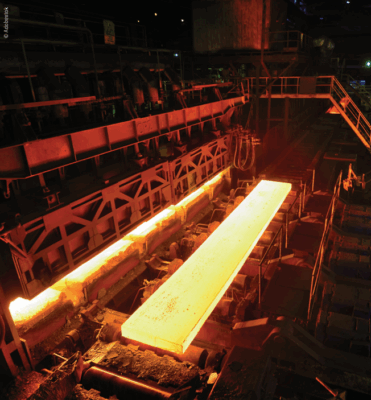
Think about steel, chemicals, cement, glass, refining. Direct electrification modernises large parts, electric furnaces, high-performance heat pumps, advanced Demand Side Management controls, while green hydrogen provides the reducing agent or very high-temperature heat electrons can’t deliver. The winning model is integrated clusters that combine clean, competitively priced electricity with hydrogen production and use, shared CO₂ transport and storage, and grid connections sized for the transition.
CCS and CCU still looks expensive. Should deployment be supported, and how?
CCS and CCU are not silver bullets, but they are part of the toolbox we’ll need to decarbonise industry. Costs are still high often between €70 and €250 per tonne of CO₂ captured and stored, so public support should focus on scaling and innovation rather than blanket subsidies.
I would, however, raise a concern about the delegated act adopted in October by the plenary on green-house-gas accounting for low-carbon fuels. It mirrors last year’s RFNBO act and sets a 2041 deadline after which companies under the ETS can no longer avoid surrendering allowances for CO₂ used in fuels. This risks discouraging private investment in CCU, which depends on long-term certainty and plays a role in Europe’s circular carbon economy.
That is why the Commission needs to revisit this 2041 cut-off. This is needed to ensure that Europe keeps room for innovation across all forms of carbon management, whether storage, use, or capture linked to industrial transformation.
2035 and new combustion-engine cars, shall the EU amend the ban or not?
I support the destination zero-emission mobility but I’m critical of a blanket, administrative ban fixed to 2035. Climate policy must deliver affordable cars, resilient industry and real cuts, not just headlines. Keep the goal, but run a pragmatic review before 2030 on three tests: dense charging networks, competitive and predictable electricity prices, and sufficient European manufacturing capacity from cells to drivetrains. I am also supporting some level of technology neutrality: battery EVs will dominate, yet room for sustainable e-fuels in specific niches can preserve engineering and jobs without diluting ambition. In short: keep the destination, fix the path with realism, competitiveness and social fairness.