Mr Oetjen, with the adoption of the ReFuelEU regulation, the EU now has a framework to decarbonise the aviation sector. Is that framework realistic and appropriate? Do you believe that air traffic should be limited?
Restricting air traffic is a dirigiste measure that I would not opt for.
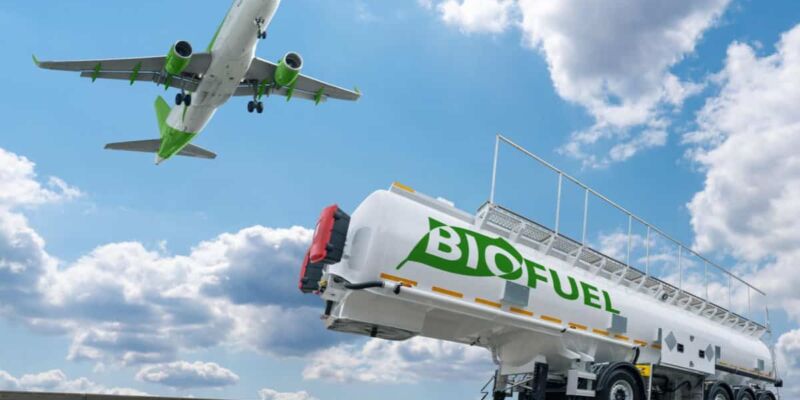
The RefuelEU regulation is a good and solid framework for the uptake of alternative fuels in the aviation sector with the overall aim of decarbonising aviation. In my opinion, we need additional measures such as those set out in the Clean Industrial Deal, in particular regarding the de-risking of investments in the production capacity for alternative fuels.
Can the EU develop its own SAF industry? Will we have enough biomass and low carbon electricity?
The EU can certainly develop its own strong sustainable aviation fuel industry. It is just a matter of ramping up. We will need alternative fuels not only for the aviation sector but as well to decarbonise the existing road and maritime fleet. There are different ways of producing fuels for this. Using biomass or low-carbon electricity are two of them, green electricity is another. Another option is to have partnerships around the world from which we can import alternative fuels. But when it comes to choosing reliable partners in third countries, there are of course certain preconditions. We need to work with countries that are stable and democratic. In addition, the production of electricity has to be cheaper than it is in Europe. A good example of this would be the case of Chile.
The European Commission has committed to look into the possibility of setting up a “book and claim” mechanism in the ReFuelEU regulation to make it easier for airports and airlines to access SAF. This mechanism that would de facto create a market of virtual SAF in which airports and airlines would buy SAF certificates, has not found consensus among economic actors and EU decision-makers. Do you think such a mechanism would be feasible and would it be beneficial?
A book and claim mechanism would provide for more flexibility in the system. Especially at the beginning, since the SAF will not be available at each airport from the start. There must be a system where it is not necessary to transport those alternative fuels physically to every airport. This could be very useful in order to have a quicker market uptake.
This book and claim mechanism is already foreseen in the RefuelEU aviation legislation. The European Commission is therefore obliged to come up with a proposal on how to implement such a mechanism. We hope that the European Commission follows up on this soon.
SAF are significantly more expensive than conventional kerosene. Will the mechanisms adopted at the EU level be sufficient to maintain the competitiveness of EU airlines?
That is indeed the case. That is why we have introduced the so-called sustainable aviation fuel allowance into the ETS aviation framework. These SAF allowances bridge the price gap between conventional kerosene and SAFs and will help the market for alternative fuels to develop. It is a question of economies of scale. In the long run, SAF prices will come down, but in any case, the mechanisms we have put in place will have to be met by all airlines operating in Europe. Moreover, we urge the European Commission to find solutions to the competition between non-EU airport hubs and EU airport hubs in order to avoid market distortions.
At what kind of solutions are you thinking?
We think that the European Commission should look into the Carbon Border Adjustment Mechanism, since this competition is a kind of carbon leakage from EU hubs to non-EU hubs. The same applies for the maritime system. Solutions are needed in global agreements on how to tackle CO2 emissions.
The current EU-ETS free allowances mechanism favours synthetic fuels of renewable origin over low carbon synthetic fuels that can be produced from nuclear electricity. How do you explain this difference?
The difference between synthetic fuels from renewable sources and low-carbon synthetic fuels from nuclear power is important because carbon fuels from nuclear power are simply not renewable. It is the right political decision to aim for fuels based on renewable sources.
Airports are at the center of various aspects and activities related to air transport. How can they contribute to the decarbonisation of the aviation sector and how should they be supported in this role?
Airports are currently implementing various decarbonisation measures. European airports in particular have been at the forefront of efforts and innovative solutions to make airport management and operations more environmentally friendly. As a result, they are already well on their way to making an important contribution to the decarbonisation of the aviation sector.
The inclusion of the aviation sector in the taxonomy has been a topic of debate with some arguing that the renewal of fleets with newer, more energy efficient aircrafts is a key lever of GHG emission reduction, and others believing that with air transport currently relying on kerosene, it shouldn’t be included. What is your opinion on this issue and on the current text?
For me it is very clear that investments in green aviation must be included in the taxonomy. The reduction of energy consumption by newer aircrafts is one of the key levers in order to reduce carbon footprint. We should replace traditional kerosene with alternative fuels and at the same time reduce the fuel consumption so that the overall CO2 emissions are reduced in two ways.
Will the most recent revision of The Single Sky regulation significantly contribute to reducing GHG emissions from the aviation sector?
It is a step forward that we have adopted the Single European Sky legislation after long negotiations with Member States. Although it is only a small step, air traffic management can do a lot to decarbonise the aviation sector. Not only through legislation, but also by implementing new digital solutions in air traffic management that optimise trajectories, such as those currently being developed by the SESAR Joint Undertaking.
As regards aviation, what are your expectations as for the initiatives that will be taken in the new EU mandate?
The European Commission announces that it will review the Air Service Regulation to see if market practices and the market itself are operating properly. We fully support that initiative. At the same time, there is the review of the ReFuelEU – Aviation regulation, where we need a solid assessment from the European Commission if we want to adapt the regulation. Furthermore, my expectation is that the regulation on airport charges will not be touched in this mandate.